Learning how to recognise red mites early is one of the most important things you can do for your flock, because these tiny parasites are easy to miss until an infestation is well under way. Red mites (Dermanyssus gallinae) are blood-sucking pests that live in your coop rather than on your birds, hiding by day and feeding at night – so knowing what they look like, where they hide and the signs they leave behind makes all the difference.
Short answer: red mites are tiny, eight-legged parasites that appear white or grey when unfed and red or dark brown after feeding on blood. Look for them in perch ends, joints and crevices, and watch for pale combs, reduced laying, restlessness at night and ash-like grey deposits in the coop.
This guide explains what red mites are, what they look like at different stages, how they spread and hide, and the effects they have on poultry. For the practical how-to, see our companion guides on how to check your hen for lice and red mites and how to avoid red mites in your chicken coop.
What are red mites (Dermanyssus gallinae)?
Red mites are external parasites (ectoparasites) that feed on the blood of chickens and other poultry while living in their housing. Also known as the poultry red mite, Dermanyssus gallinae is one of the most common and persistent pests in backyard flocks. These pests are most active at night, which is exactly what makes them so difficult to detect – by day they retreat into the dark cracks of the coop, out of sight.
Crucially, red mites live in the coop, not permanently on the bird. They emerge after dark to feed, then return to their hiding places before morning. That is why recognising them depends as much on inspecting the housing as on examining your hens.
What do red mites look like?
Knowing what red mites look like is the key to identifying them. Their appearance changes depending on whether they have recently fed:
- Before feeding (by day): juvenile and unfed mites look white, grey or translucent, and are barely the size of a pinhead.
- After feeding (at night): once they have taken a blood meal, they swell and turn bright red, then darken to red-brown as the blood digests.
Because they are so small, a clustered group of mites can look like a moving patch of fine grey or red dust. A simple test is to wipe a white tissue along the underside of a perch after dark – smears of red confirm feeding mites are present.

Red mite life cycle and how they spread
Red mites breed alarmingly fast. Their life cycle from egg to adult takes just 5–10 days, so a small problem can become a major infestation within weeks. A single bird can end up exposed to 26,000+ mites in 9–10 weeks, with numbers peaking in the warmth of spring, summer and autumn.
Red mites usually arrive in one of a few ways:
- Wild birds: sparrows, pigeons and other visitors to your run carry mites that hop onto your hens.
- New flock members: birds from commercial flocks or rescue hens can bring mites with them, so always source birds from reputable suppliers and inspect new arrivals.
- Second-hand coops and equipment: dormant mites and eggs can lurk in the joints of used timber housing for months, waking up once hens move in.
Where do red mites hide in the coop?
Red mites thrive in warm, dark, undisturbed places. The most common hiding spots are perch ends, cracks and crevices, the gaps under felt roofing, and tongue-and-groove joints in wooden coops. They strongly prefer soft, porous timber, which gives them countless sheltered places to cluster and lay eggs.
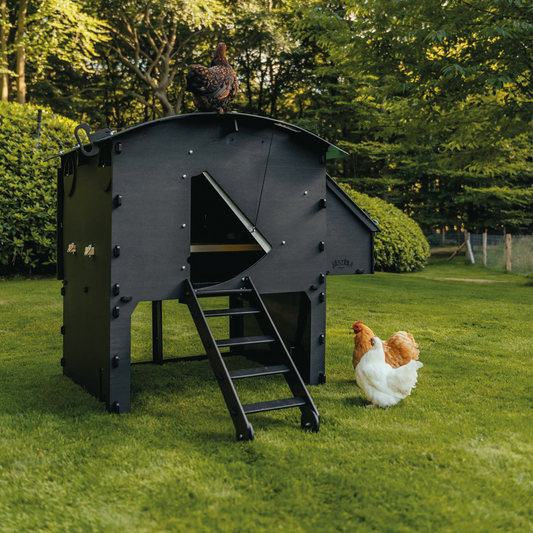
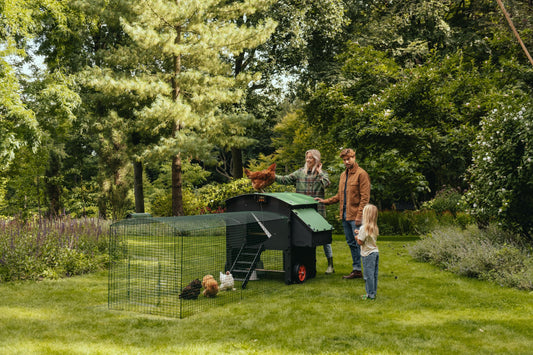
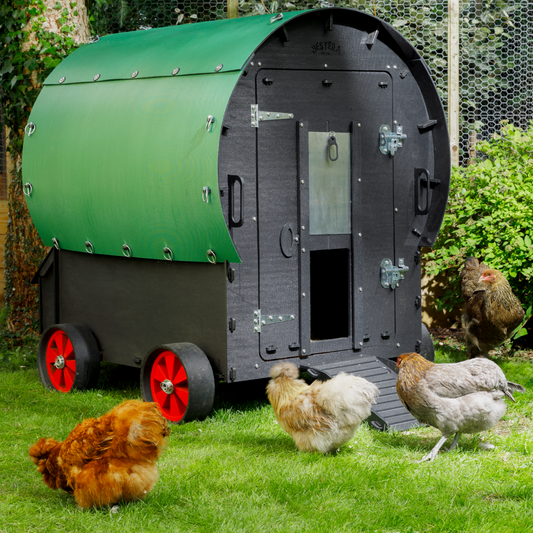
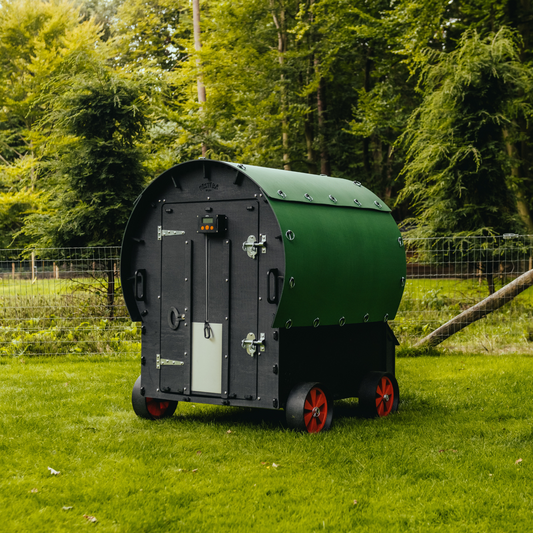
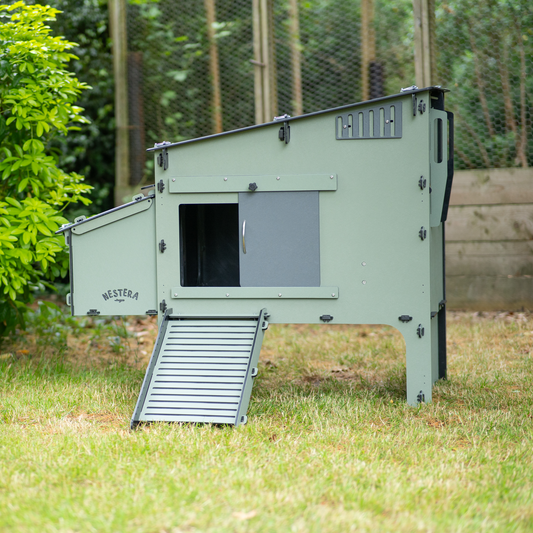
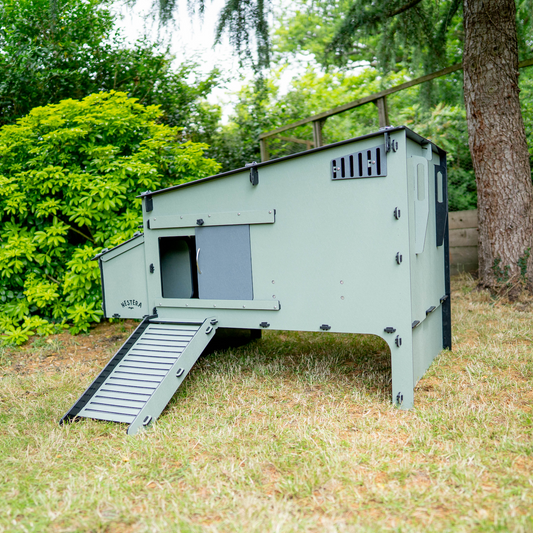
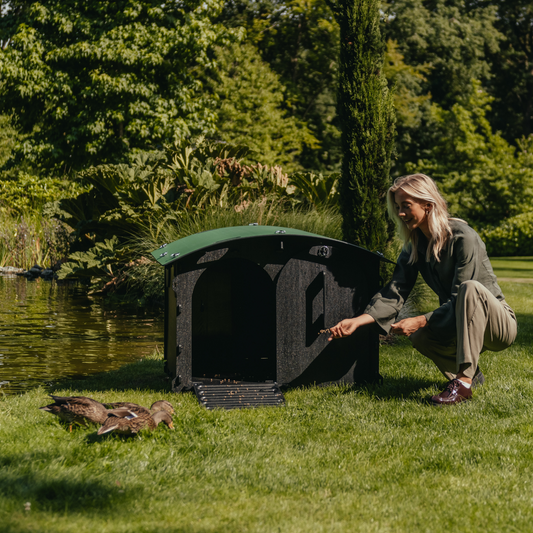
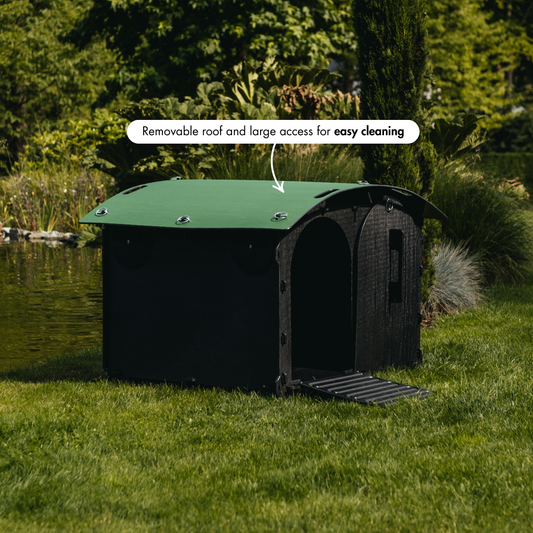
This is where coop material matters. A smooth recycled-plastic coop offers far fewer cracks and joints for mites to colonise than a traditional timber one – one reason many keepers choose a plastic chicken coop to make red mites easier to spot and harder to harbour.
Signs of red mites in your flock
Even before you spot the mites themselves, your hens and coop will give you clues. Watch for these tell-tale signs of red mites:
- Ash-like grey deposits around perch ends and joints (a mix of mite droppings, skin and eggs).
- An itchy feeling on your own arms after cleaning the coop.
- Hens reluctant to roost – birds that suddenly refuse to go into the coop at night, or sleep outside, are often avoiding the mites.
- Pale combs and wattles, lethargy and a general drop in condition.
- Restlessness at night, with birds appearing unsettled or repeatedly preening.
For a step-by-step inspection routine, including how to examine an individual bird, see our guide on how to check your hen for lice and red mites.
The effects of red mites on poultry
Red mites do far more than cause an itch – a heavy infestation has serious effects on poultry health, productivity and welfare:
- Anaemia and poor health: constant blood loss leads to anaemia, pale combs, lethargy and skin irritation, which can trigger feather pecking and secondary infections.
- Reduced laying: infestations lower egg production and can cause thinner, weaker eggshells.
- Stress and behavioural change: birds become restless, preen excessively and may avoid the coop, with disrupted sleep adding to the strain.
- Disease transmission: red mites can spread diseases such as Salmonella and avian influenza between birds.
- Death in severe cases: if a heavy infestation is left untreated, the cumulative blood loss and stress can prove fatal, particularly to young or already weakened birds.

What to do if you recognise red mites
If you spot the signs above, act quickly – red mites multiply fast. Because they live in the housing rather than on the birds, environment control is key: deep-clean the coop, paying close attention to perch ends, joints and crevices, and avoid simply hosing or jet-washing it, as this tends to displace mites rather than kill them. Using heat and thorough cleaning is far more effective. Providing your hens with regular dust baths also helps them keep parasites in check naturally.
For any parasite treatment, medication or if your birds appear unwell, always consult your vet or a qualified poultry specialist for advice and products suited to your flock – we don't recommend dosing birds without professional guidance. The video below shows how a smooth, dismantlable coop makes a deep clean far quicker.
Frequently asked questions about recognising red mites
What are red mites?
Red mites (Dermanyssus gallinae) are tiny blood-sucking parasites that live in chicken housing and feed on birds at night. They are one of the most common pests affecting backyard poultry.
How do I recognise red mites in chickens?
Look for tiny mites that appear white or grey when unfed and red or dark brown after feeding, usually clustered in perch ends and crevices. In your flock, watch for pale combs, reduced laying, restlessness at night and ash-like grey deposits in the coop.
What do red mites do to chickens?
By feeding on blood at night, red mites cause anaemia, stress, reduced egg production and restlessness, and in severe, untreated cases can lead to death. They can also spread diseases such as Salmonella between birds.
Where do red mites hide?
They shelter by day in warm, dark crevices – perch ends, cracks, tongue-and-groove joints and under felt roofing – especially in soft timber coops. Smooth recycled-plastic coops give them far fewer places to hide.
Make red mites easier to spot and harder to hide
Recognising red mites early is far easier when your coop works with you rather than against you. Our range of recycled-plastic chicken coops is built from smooth, easy-clean 70% recycled plastic with no timber cracks for mites to colonise – so problems are quicker to spot, quicker to clean and far easier to keep on top of, giving your flock and you real peace of mind.